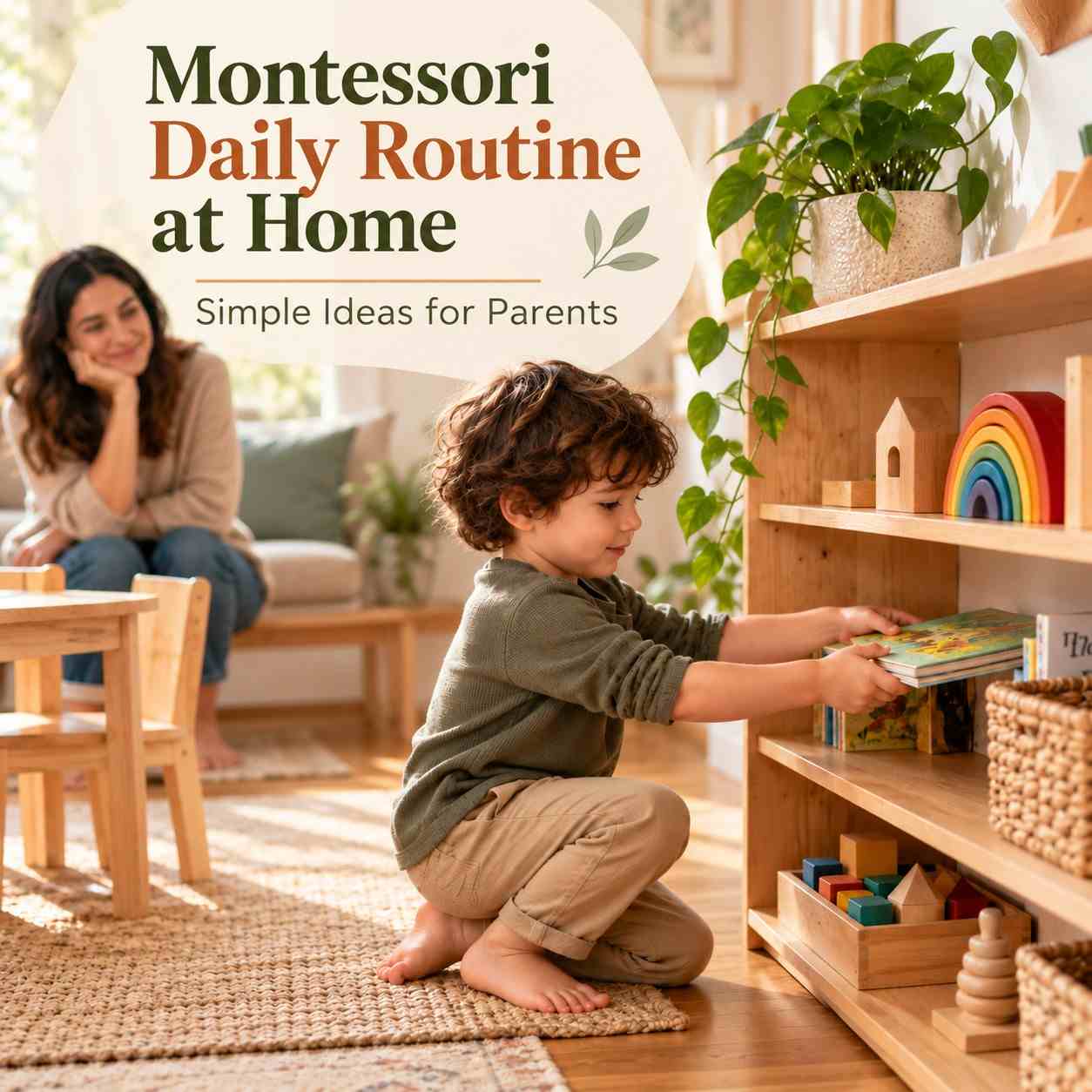
Montessori Daily Routine at Home: Simple Ideas for Parents
Ask most parents what a Montessori daily routine at home means, and you'll probably get the same answer: color-coded bins, laminated task cards, some elaborate schedule taped to the fridge. Honestly, it's not that. It's a lot less complicated. Most of it comes down to something you're already doing without realizing it — letting your child participate in everyday family activities instead of just watching it happen around them.
We see this principle in action every day at Montessori at the Park. Hand a three-year-old their own little pitcher and let them pour water into a cup, and you'd think you had given them the keys to the car. That same spark isn't locked inside a classroom. It shows up at home too, the moment you're willing to slow down and let your child do a bit more on their own.
Start the Morning With a Small Choice or Two
Most households don't have "calm mornings" — they have a countdown timer and a lot of shoe-hunting. So the idea of adding decisions into the mix might sound backwards. But even on rushed days, there's usually room for one.
Try setting out two outfits instead of picking one for them. Let them choose. If they're a bit older, offer more responsibility — getting dressed by themselves, hanging up pajamas, tossing dirty clothes in the hamper. Small stuff, but it's theirs to do.
It will probably take longer than if you just did it yourself. That's fine — that extra time is where the learning actually happens. Children need to fumble through a task a few times before it starts to feel easy.
A Montessori Daily Routine at Home can include these simple morning choices.
Let Them Be Genuinely Helpful, Not Just "Included"
A child can sense the difference between a real job and busywork. A Montessori routine at home leans into giving them actual responsibilities around the house, not pretend ones.
A few tasks that tend to work well, depending on age:
* Putting toys back where they belong
* Rinsing fruit in the sink
* Watering a plant
* Lining up shoes by the door
* Wiping up a spill with a small towel
The napkins won't be perfectly straight. The plant might get a little too much water. None of that matters. What matters is that your child did something real, start to finish, on their own.
Protect Some Time for Independent Play
This is the easiest one to skip, mostly because it doesn't look like much. A child parked on the floor with a puzzle, quiet and completely lost in it — nothing's happening, right? Actually, that's the good stuff. That's a child teaching themselves how to focus.
Keep a few open-ended activities — books, puzzles, art supplies — somewhere your child can reach without help. Then let them choose. Some days they'll bounce between three things in ten minutes. Other days they'll sit with one activity for what feels like forever.
The hard part for a lot of parents is staying out of it. Unless something's genuinely wrong, try to resist stepping in to fix, direct, or narrate what they're doing. That quiet stretch is where focus gets built.
Spend a Few Minutes Outdoors
Forget the idea that this needs to be a whole outing. It doesn't. A lap around the block, five minutes in the backyard, standing at the window watching a squirrel do its thing — all of it counts.
children catch things we stopped noticing years ago. A crack in the sidewalk. An ant hauling something twice its size. That smell right after it rains. Follow their lead for a minute instead of rushing them along, and you'll be surprised what kind of conversation you end up having.
Keep the Evenings Predictable
Bedtime doesn't need to run on a strict clock, but children do better when the steps happen in roughly the same order every night. Put toys away, change into pajamas, brush teeth, pick a book. That's really it.
Letting your child help with parts of this — choosing the book, putting their own toys away — carries the same idea from the morning all the way through to bedtime: they're a participant in their own routine, not just along for the ride.
Not Every Day Needs to Go Perfectly
Some days will feel easy. Others will fall apart before you've even had coffee, and that's just how it goes. None of this is about nailing some perfect routine day after day. It's about handing your child small, ordinary chances — to choose something, to help with something, to do a little more on their own than they did yesterday.
Start with one or two responsibilities. Let your child struggle a bit before jumping in. Add more as they're ready. That's really the whole approach.
If you'd like to see these ideas in action, we'd love to have you visit Montessori at the Park and see how our classrooms build independence day to day.
FAQ:
1. What is a Montessori daily routine at home?
Letting your child take part in everyday stuff — getting dressed, tidying up, helping with meals, playing alone, winding down at night. Small, repeated chances to do things themselves.
2. How do I start a Montessori routine at home?
Pick one or two things. Let them choose an outfit, put toys away, water a plant. Add more once that feels normal.
3. Does a Montessori routine need a strict schedule?
No. Just a few familiar things happening in roughly the same order each day.
Top Related Post
Toddler Montessori Program:A Parents Guide to Early Childhood Learning
Ask most parents what a Montessori daily routine at home means, and you'll probably get the same answer: color-coded bins, laminated task cards, some elaborate schedule taped to the fridge. Honestly, it's not that. It's a lot less ...
How the Montessori Reading Method Builds Confidence in Children
Ask most parents what a Montessori daily routine at home means, and you'll probably get the same answer: color-coded bins, laminated task cards, some elaborate schedule taped to the fridge. Honestly, it's not that. It's a lot less ...